

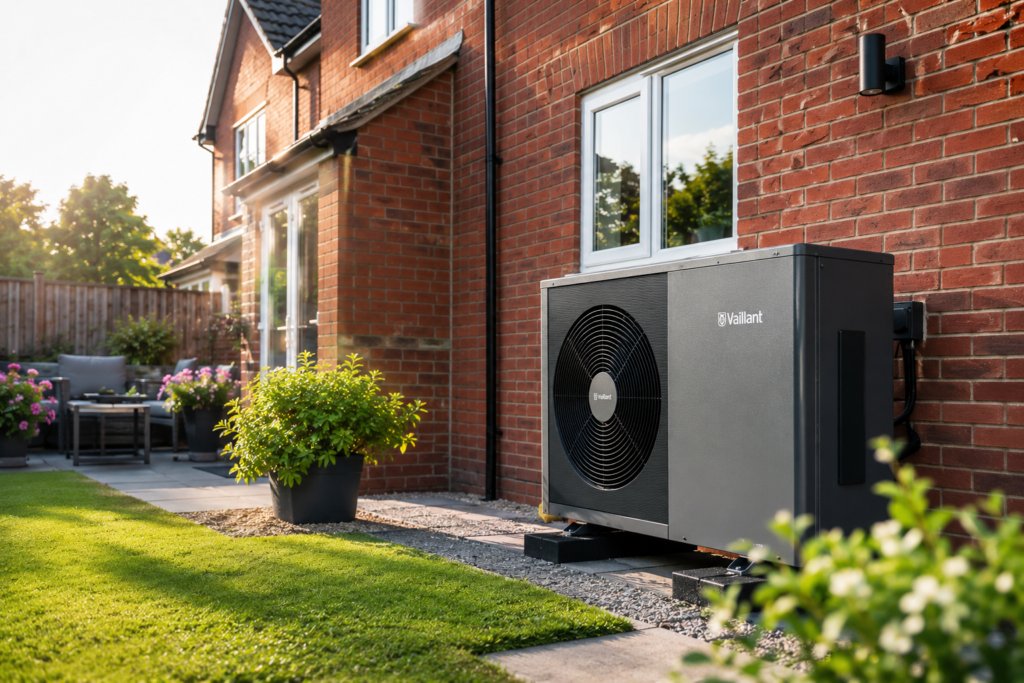
If you are like most British homeowners, checking your energy statement has become an exercise in damage limitation.
Even though the April 2026 price cap brought temporary breathing space by dropping typical household bills to £,1641, the relief was short-lived. Industry analysts warn that a sharp 12% rise is predicted for July 2026. Relying on traditional gas boilers is no longer a viable financial strategy.
To protect your bank balance, you must change how you heat your property. Thousands of people are turning to air source heat pumps uk technology to insulate themselves from standard utility market volatility.
Before committing your hard-earned savings to an upgrade, you need to understand how these systems work in real British weather. Making a wrong choice during planning can completely ruin your long-term return on investment.
Key Takeaways for UK Homeowners
- Beat the Price Spike: Installing a heat pump protects your home from the predicted 12% energy tariff jump arriving in July 2026.
- Capitalise on Funding: The standard Boiler Upgrade Scheme voucher gives you £7,500 off, rising to a £9,000 uplift for oil and LPG properties starting this July.
Energy Saving Trust - Insist on MCS Certification: You only qualify for government support and local power grid payouts if you use fully certified installers.
The Reality of Air Source Heat Pumps UK Performance
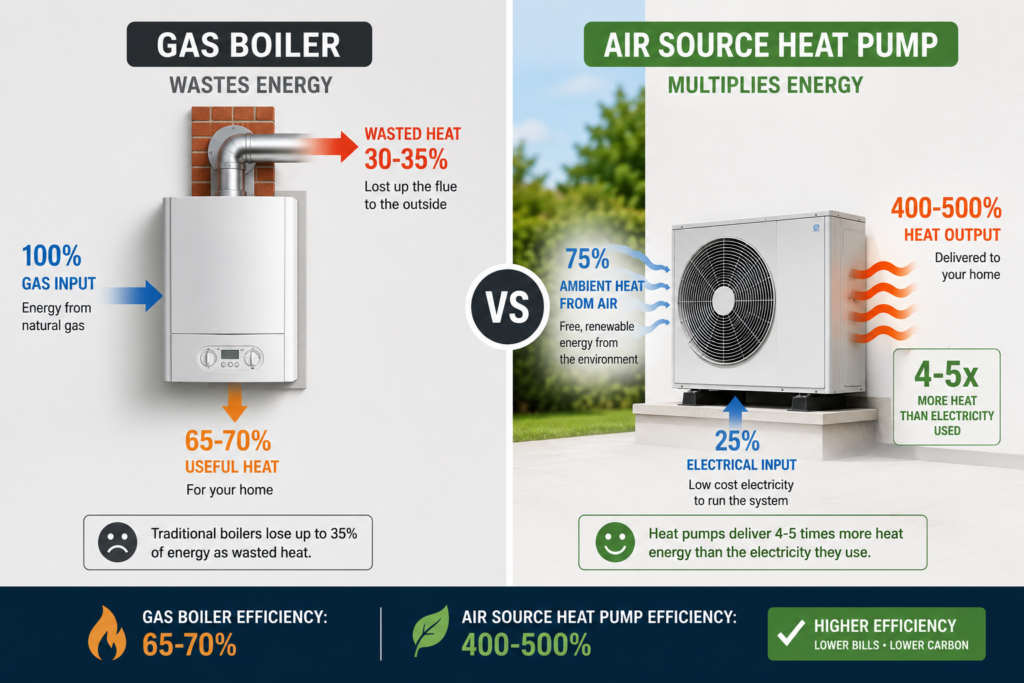
An air source heat pump acts like a refrigerator operating in reverse. The outdoor unit extracts ambient heat from the external air, compresses it to increase the temperature, and transfers that heat into your indoor central heating system and hot water cylinder.
Many people worry that the British winter will stop these units from working efficiently. Modern clean energy technology handles freezing temperatures easily. Premium systems operate reliably even when outside temperatures drop well below zero.
The real secret to maximizing performance lies in understanding the Coefficient of Performance (CoP). This metric measures the ratio of heat output to electrical input:
CoP= Heat Output (kW) / Electricity Input (kW)
If a system delivers a CoP of 3.5, it generates 3.5 kW of heat energy for every 1 kW of electricity consumed. This makes it far more efficient than even the best modern condensing gas boilers, which max out at around 0.92 efficiency (92%).
Comparing Heating Systems for British Properties
| Performance Metric | Traditional Gas Boiler | Air Source Heat Pump (ASHP) |
| Average Operational Efficiency | 88% – 92% | 300% – 400% (CoP of 3.0 – 4.0) |
| Carbon Footprint (Per Annum) | ~2,200 kg of CO2 | Up to 70% lower (Grid-dependent) |
| Average Lifespan | 10 – 12 Years | 15 – 20 Years (With basic care) |
| Fuel Price Vulnerability | Extreme (Subject to global markets) | Low (Mitigated by smart tariffs) |
5 Massive Heat Pump Mistakes to Avoid
1. Neglecting Your Existing Insulation Base
A heat pump is designed to deliver consistent, low-temperature water to your heat emitters over long periods. If your home loses heat rapidly through uninsulated cavity walls or a bare loft, the unit will work twice as hard to maintain a comfortable temperature. This destroys your operational efficiency and drives up your electricity usage. Always seal drafts and improve insulation before installing new heating hardware.
2. Sizing the Outdoor Unit Incorrectly
An incorrectly sized unit causes severe performance issues:
- Under-sized systems: The equipment runs constantly without ever reaching your thermostat setpoint, leaving you cold while inflating your power bill.
- Over-sized systems: The hardware cycles on and off rapidly (known as short-cycling), which creates unnecessary wear and tear on the internal compressor and shortens its lifespan.
Trane
Professional technicians run room-by-room heat loss calculations using strict architectural guidelines to find the perfect system capacity for your layout.
Energy Design Systems
3. Keeping Small, Outdated Radiators
Because gas boilers pump out water at roughly 70°C, they can use small radiators to heat a room. Heat pumps run much cooler, usually between 35°C and 55°C. To distribute that same volume of warmth evenly, you need a larger surface area. Keeping old, narrow radiators forces the heat pump to run at higher temperatures, dropping your operational efficiency significantly. Upgrading to oversized design radiators or underfloor heating yields the best financial results.
Gas Boiler Model —-> High Temp (70°C) —-> Small Radiator Surface Needed
Heat Pump Model —-> Low Temp (45°C) —-> Larger Radiator / Underfloor Needed
4. Ignoring Smart Export and Time-of-Use Tariffs
Running a heat pump like an old gas boiler—turning it off completely at night and blasting it in the morning is highly inefficient. The smart way to manage your system is to use specialized time-of-use energy tariffs. By scheduling your hot water production and space heating cycles for off-peak hours when electricity prices drop, you drastically reduce your running costs.
5. Missing the Cutoff for Financial Uplifts
The financial support landscape across the UK is changing quickly. While the standard Boiler Upgrade Scheme grant offers a solid £7,500 subsidy, an upgraded £9,000 voucher is launching this July for homes currently running on oil or LPG. Waiting too long means risking project delays that could push your installation into volatile winter pricing, while rushing without an approved voucher means missing out on free funding entirely.
Shifting Focus from Grants to Long-Term Grid Freedom
While saving thousands on your installation with a government grant is a great bonus, the real prize is achieving long-term energy independence. The UK power market is shifting away from fossil fuels, making oil and gas increasingly expensive options for modern homes.
By switching to air source heat pumps uk systems, you decouple your home from international gas pipelines. When you pair a heat pump with a smart home setup, you gain control over your energy budget. Instead of reacting to price spikes, you consume energy on your own terms.
The Smart Hybrid Evolution: Homeowners who combine their heat pump upgrade with solar panels and domestic battery storage often cut their winter utility dependencies by more than half, protecting their household budget from future market shocks.
The Matchmaker Pivot: Getting Your Installation Right
Navigating plumbing layouts, electrical configurations, and government voucher paperwork can feel overwhelming. You do not have to tackle this transition alone.
At Green Tide Energy, we remove the stress from your home upgrade. We connect you directly with local, vetted, MCS-accredited installation specialists who understand the unique structural realities of UK properties.
Our trusted partner network handles everything for you. They manage the initial structural assessments, optimize your radiator layout, and complete all the complex grant applications on your behalf. This ensures your project qualifies for full funding without any administrative headaches.

Stop worrying about unpredictable heating bills and impending tariff spikes. Secure your household energy future today with a reliable, professionally tailored heating solution. Check if your home qualifies here.